The crack in your life … ?!
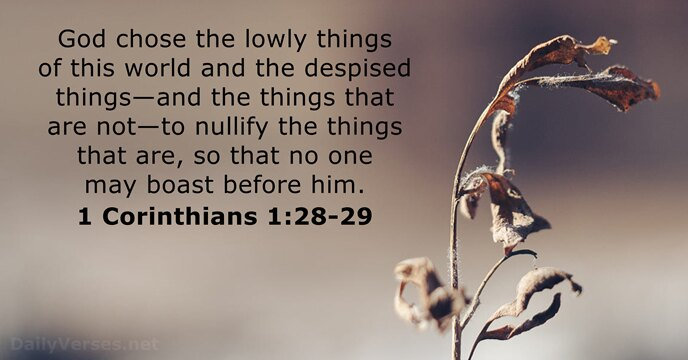
Shalom, dear Lion Family! A few days ago, I read a story, and this Bible verse came to mind. It’s found in 2 Corinthians 12:9: “My power is made perfect in weakness.” We know that Paul wrote this in the New Testament, and the context was that he had asked God to remove this so-called “thorn in the flesh.” It was probably a physical or personal burden—it could have been an illness or something else. The Bible doesn’t say exactly, but for Paul it was apparently very difficult and painful. That’s why he pleaded with the Lord—three times, in fact—to remove it, and the Lord answered him with these words:
My power is made perfect in weakness.
The point of all this is that we don’t have to be perfect or wonderful on our own; rather, it is precisely where we have limitations, where we are vulnerable and weak, that His power is simply more fully manifested. As long as we’re all constantly trying to figure things out on our own—no matter what it is—and always relying on our own strength, God’s power isn’t fully at work in us. That’s because our own strength can fade very quickly and, in the worst case, could lead to burnout—where you simply overburden yourself or are overwhelmed by life’s circumstances, or where you feel like you can’t escape the rat race. And this is such a comforting Bible passage because God assures us through it that we depend solely on His strength and help in our lives, for where we are weak, there He is strong. So, now for this story. Perhaps some of you are familiar with it—it’s quite well-known: the story of the farmers and the two buckets, often referred to as the parable of the cracked jug.
It’s about self-acceptance, the value of so-called weaknesses, and the hidden beauty in imperfection. Here’s a brief and vivid summary of the story.
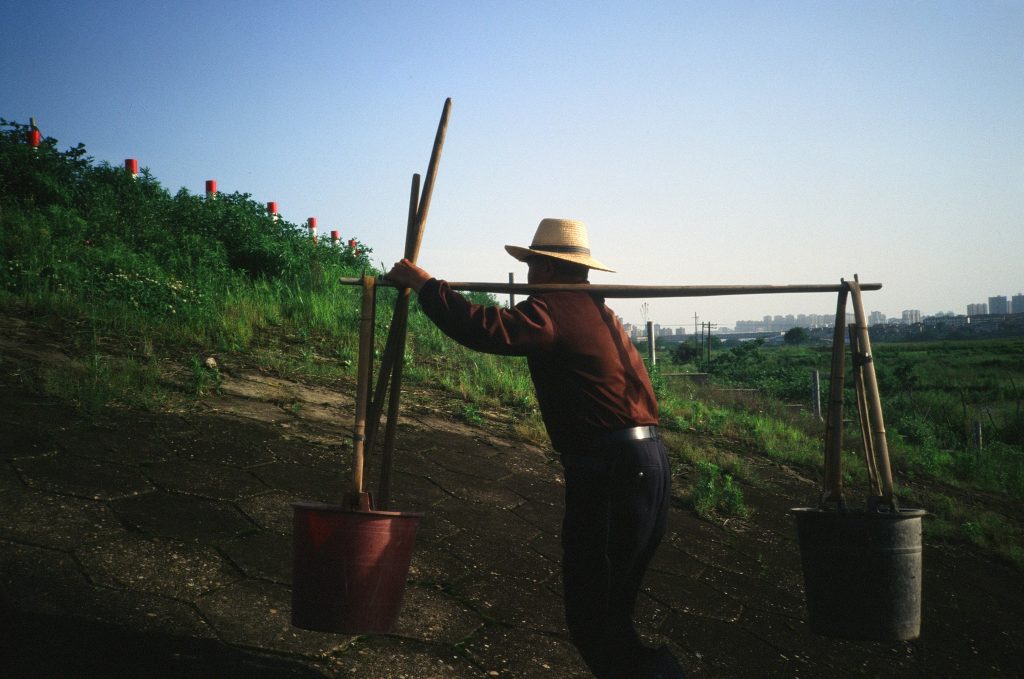
The Two Buckets. A farmer in India carried two large buckets on a pole across his shoulders every day to fetch water from a distant river and bring it home. One bucket was flawless and always brought the full amount of water home at the end of the long journey.
The other bucket had a crack. On the way from the river to the house, water constantly seeped out, so that by the end it was always only half full.
The feeling of shame.
This went on for two years. The perfect bucket was immensely proud of its performance. The cracked bucket, on the other hand, was deeply ashamed of its flaw.
It was unhappy that it could only accomplish half of what it was made to do. One day, the cracked bucket could take it no longer and said to the farmer by the river, “I’m so ashamed, and I want to apologize to you.” We do this often, too—at least I hope so—feeling ashamed of our wrongdoing, our thoughts, feelings, words, or deeds—what we commonly call “sin.”
Or for our weaknesses. I have weaknesses; you have weaknesses. And then we look at those seemingly flawless other people who’ve accomplished so much in life.
And you and I—we may not have achieved what we would have liked to achieve. That perfect goal, the perfect person, the perfect career, the perfect family—everything has to be perfect. So we’re like that bucket with a crack that goes to Jesus.
And we apologize. And the strange thing about the story is that the farmer asked in amazement, “Why?” What are you apologizing for? I can’t hold the water because of my crack. You work hard every day, but because of me, only half the water
reaches your house, the bucket lamented. The farmer’s surprise. God smiles.
The farmer smiled and said, “When we go home, please take a look at the side of the road.” As they walked up the mountain, the old, cracked bucket looked down and noticed the beautiful wildflowers along the roadside. Still, at the end of the path, he felt bad again because he had lost half the water once more.
Then the farmer said to him, “Did you notice that the flowers bloom only on your side of the path, but not on the side of the perfect bucket? I knew about your crack and took advantage of it. I scattered flower seeds on your side of the path, and every day when we walked home from the river, you watered them.”
For two years, I was able to pick these beautiful flowers and use them to decorate our table. If you weren’t exactly the way you are, this beauty would never have existed.”
Prayer:
Lord, I thank you for this story.
Lord, I thank you that we don’t have to be like the perfect bucket, even though we’d like to be. That it is precisely these weaknesses, these cracks in our hearts, this pain, this imperfection that bring your perfection into our lives. That through the suffering we’ve already experienced, we can water others so they may blossom into beautiful flowers.
People whom You send our way on our life’s journey—may we comfort them with the water of life that You give. And may they blossom, so that flowers may spring forth to bring joy to others. Lord, I thank You that even our imperfect, little lives bring forth something beautiful.
No matter how you see yourself right now or how I see myself, it comforted me to think: Okay, I don’t have to be perfect; I don’t have to perform at my best every day for you to love me, for you to accept me, and so that I can do something good in your kingdom. Instead, just as I am right now, you want to use me to change people’s lives and bring about something beautiful for others—and for myself as well. And for that, I thank you, Lord.
I wish you God’s abundant blessings, and even if the rift in your life may be very deep, even if the pain in your heart is very, very great, I pray that it will grow smaller and smaller, that the wound will heal. But never forget: you don’t have to be perfect—there is only one who is perfect, and that is Jesus Christ.

Shalom. Sabine 💙